Shabazz Tribe Learning
  • Home
  • Lessons
    • Junior Scientists
    • Senior Scientists
    • Head Scientists
  • Media Resources
  • MTTBC
  • NOIWC
  • Home
  • Lessons
    • Junior Scientists
    • Senior Scientists
    • Head Scientists
  • Media Resources
  • MTTBC
  • NOIWC
Search by typing & pressing enter

YOUR CART

In the name of Allah, Who Came in the Person of Master Fard Muhammad to Whom all Holy Praise is due forever…

Republic of Mali
Picture
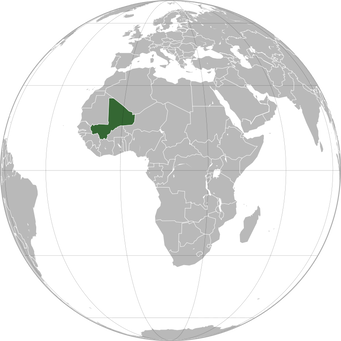
Location of Mali, Africa
Picture
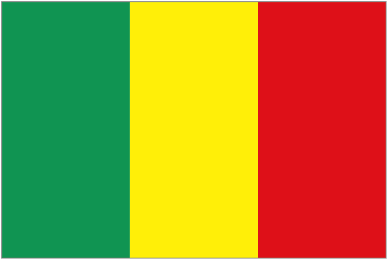
Flag of The Republic of Mali
President (2021): Assimi Goïta
Population: 20 million
Muslim Population: 90-95%
Currency: West African CFA Franc
Capital City: Bamako
Languages: Arabic, Bambara, Fulani, French
Year of Independence: 1960
Picture
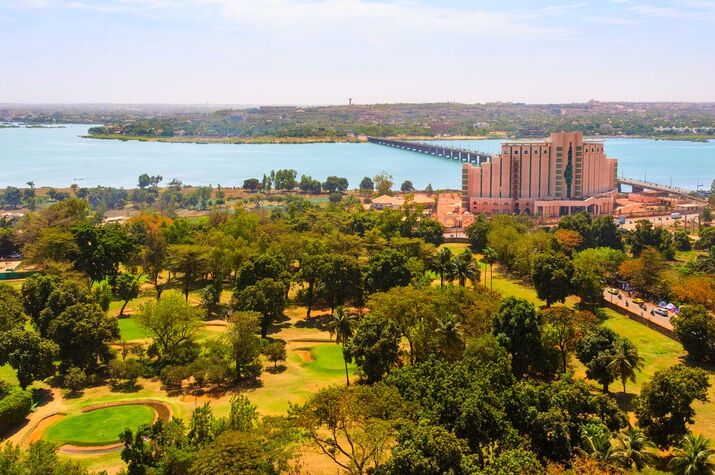
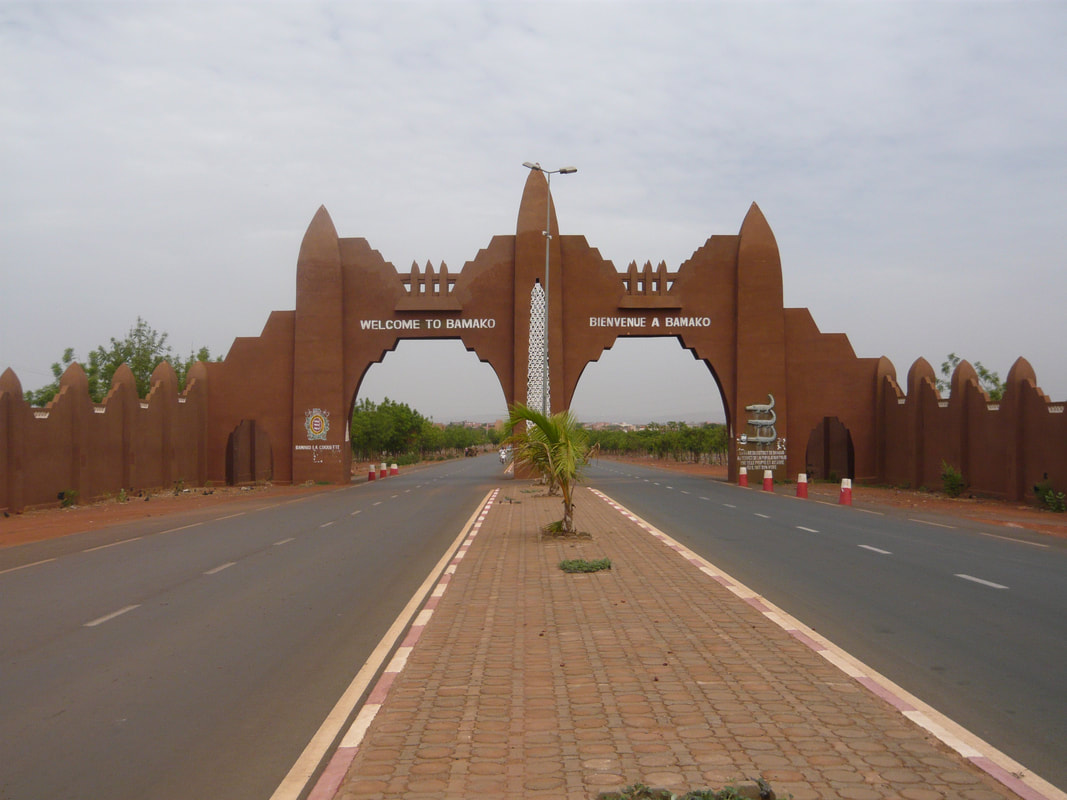
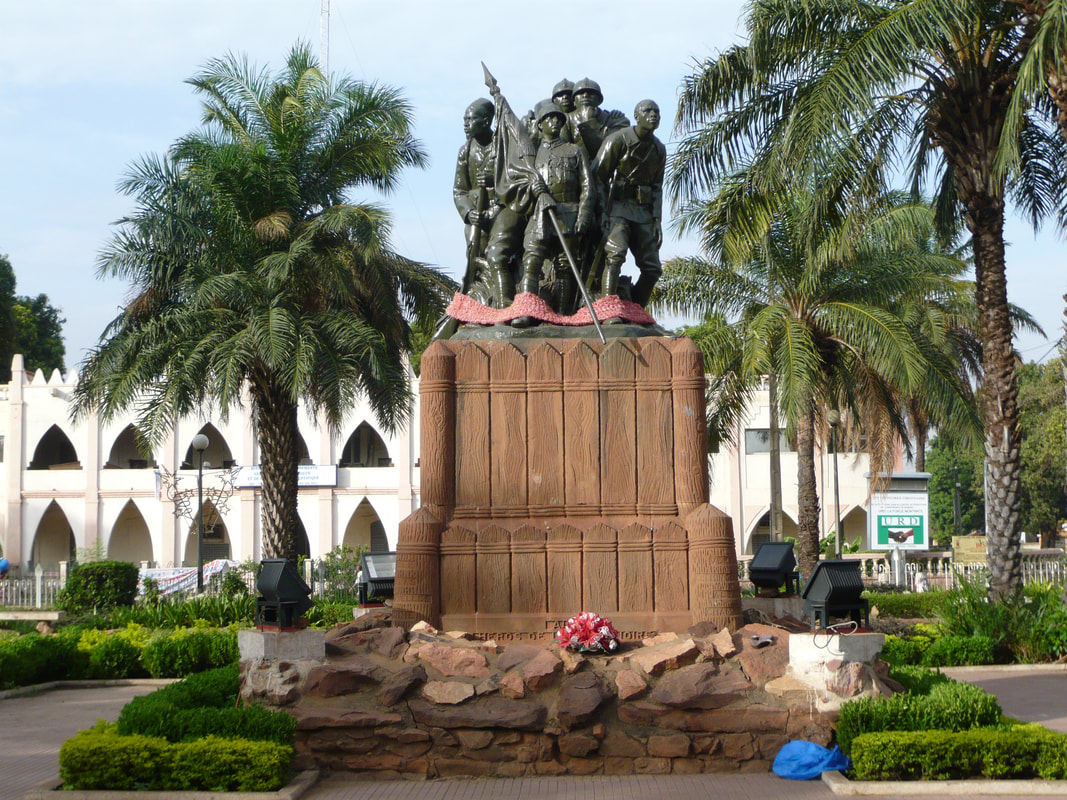
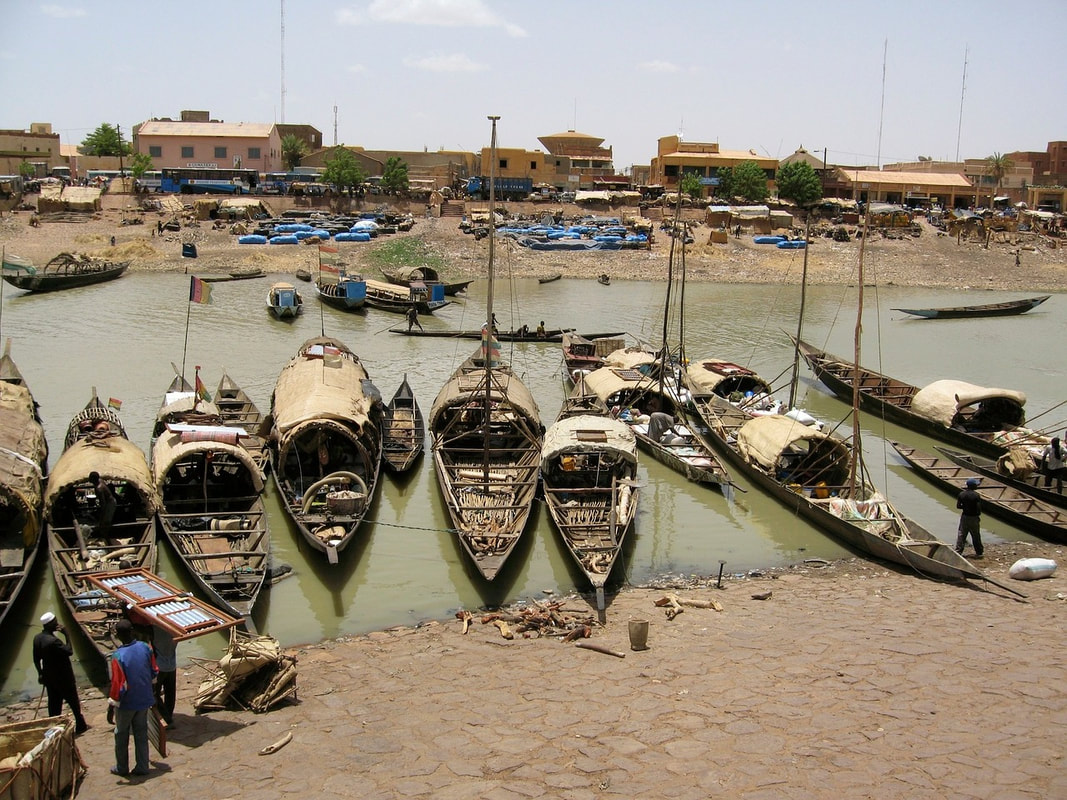
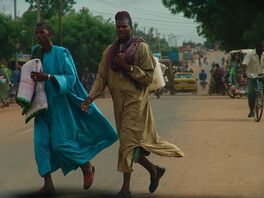
Bamako, Mali
Demographics
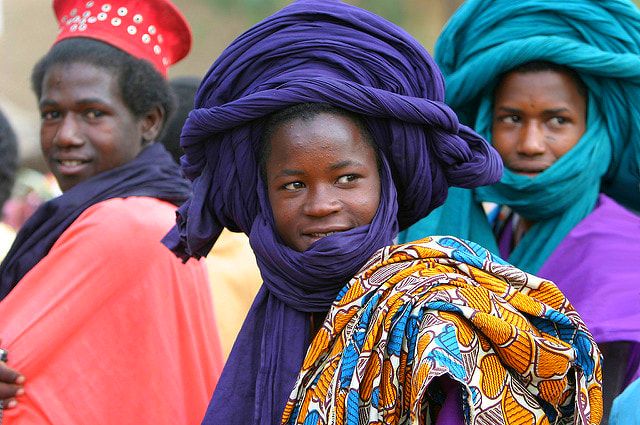
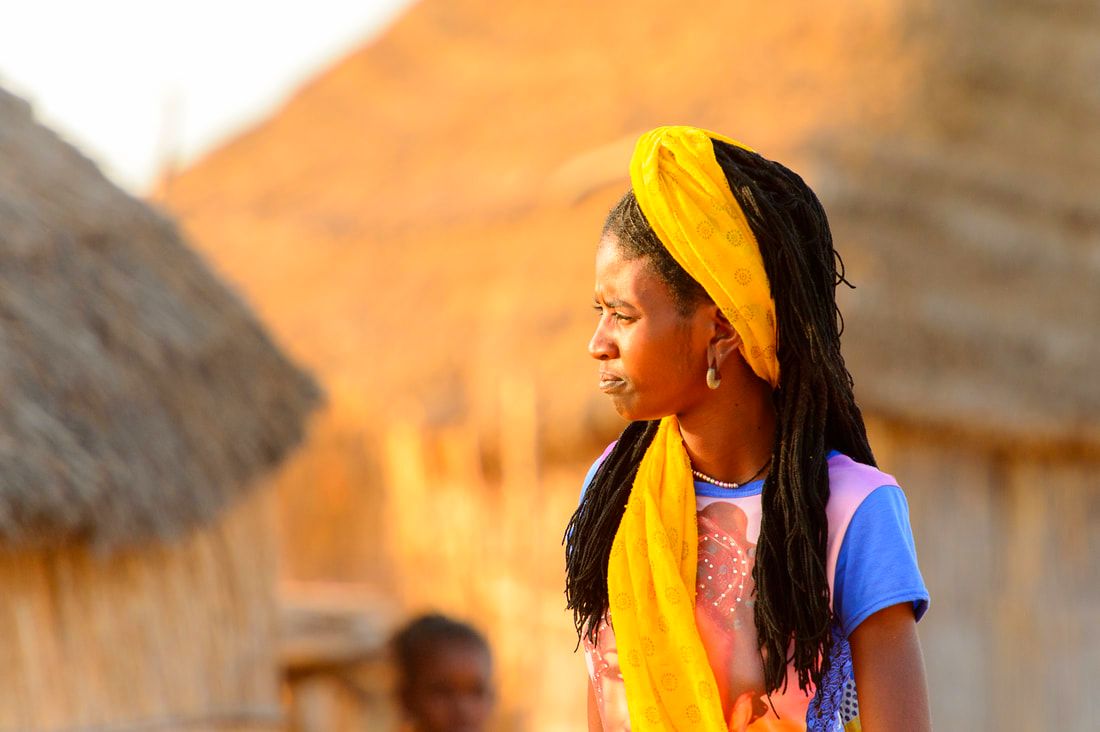
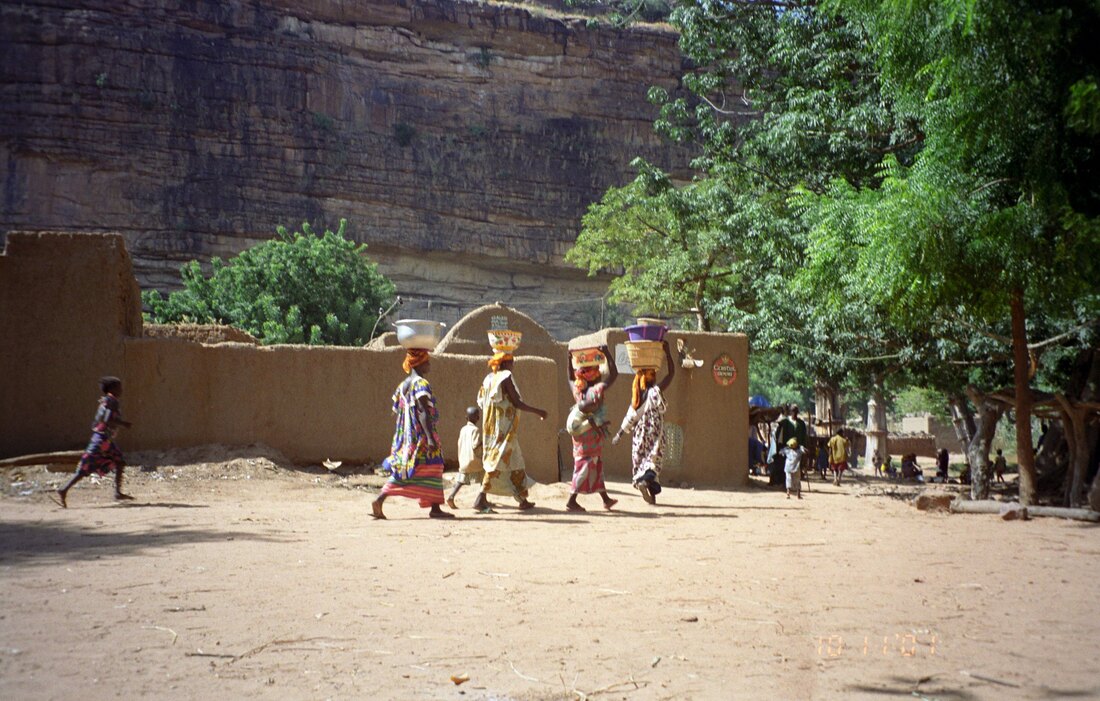
(The People Groups in the Republic of Mali)

Picture
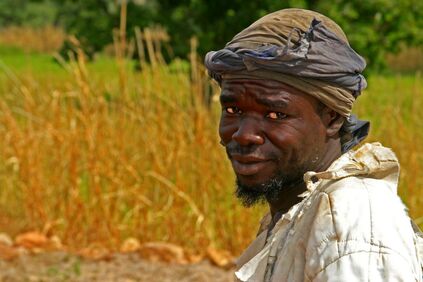
Mande 50%
Picture
Fulani/Fulbe 16%
Picture
Voltaic 13%
Picture
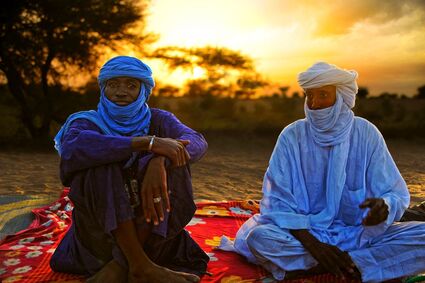
Tuareg 10%

Increase Your Vocabulary:

Agriculture: the science and work of raising crops and livestock.

Animist: a person who believes everything in nature possesses a spirit, and spirits can exist without a body. They believe in mysteries and superstitions instead of the reality of Allah.

Arid: dry, barren, or unproductive land caused by a lack of rain.

Deforestation: the process of cutting down trees in a forest.

Desertification: the transformation of fertile land into desert. This can be caused by drought, cutting down too many trees, or allowing animals to graze too much.

Economy: the system of making and spending money in a specific nation or area.

Great Green Wall: Africa's project to combat desertification by planting trees and gardens across the Sahel.

Infrastructure: the basic facilities that allow a system to function.

Jali/Griot: someone born into a caste of African oral historians. They keep record of local history, genealogy, traditions, and culture.

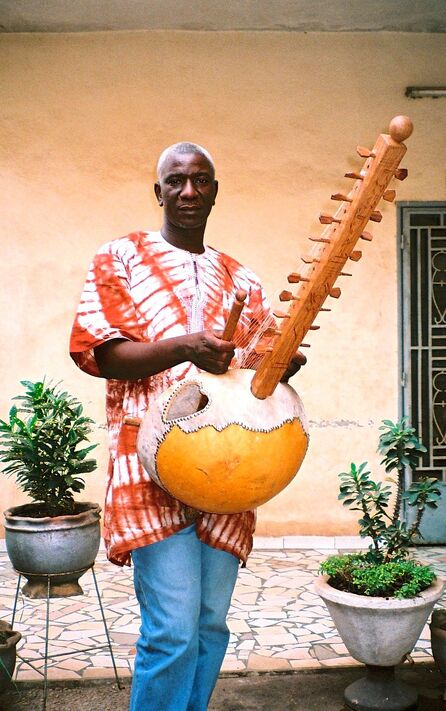
Kora: a stringed instrument that combines features of a harp and lute. It is often played by jalolu/griots.

Landlocked: completely surrounded by land; having no access to the sea.
Nomad: A member of a tribe who moves along a traditional route, having no permanent home.

Permaculture: a system of farming using an ecosystem (a community of living things and their environment) that can sustain itself.

Savage: one who has lost the knowledge of himself and is living a beast life. The people who refuse to accept Divine Guidance or Allah's Message brought by His Messengers are classified as uncivilized or savages.

Sahel: the large arid area bordering the southern edge of the Sahara desert.

Savanna: an area of grass with a few trees or bushes. Do not confuse this word with Savannah, a city in the state of Georgia.

Separatist: a person who wishes to separate from one group to form a distinct political, religious, or ethnic group.

Subsistence farming: underdeveloped methods of farming that bring little or no profit and keeps the farmer poor.

Sudan: this word comes from the Arabic phrase bilād as-sūdān (land of the Blacks). It is usually used to describe the Republic of the Sudan or the Republic of South Sudan. Historically, it has been used for West Africa as well.

Tropical: pertaining to areas located between the Tropic of Cancer and the Tropic of Capricorn (near the equator); a hot, humid climate.

Uninhabited: a place where no one lives.

Magnificent Mali

Picture
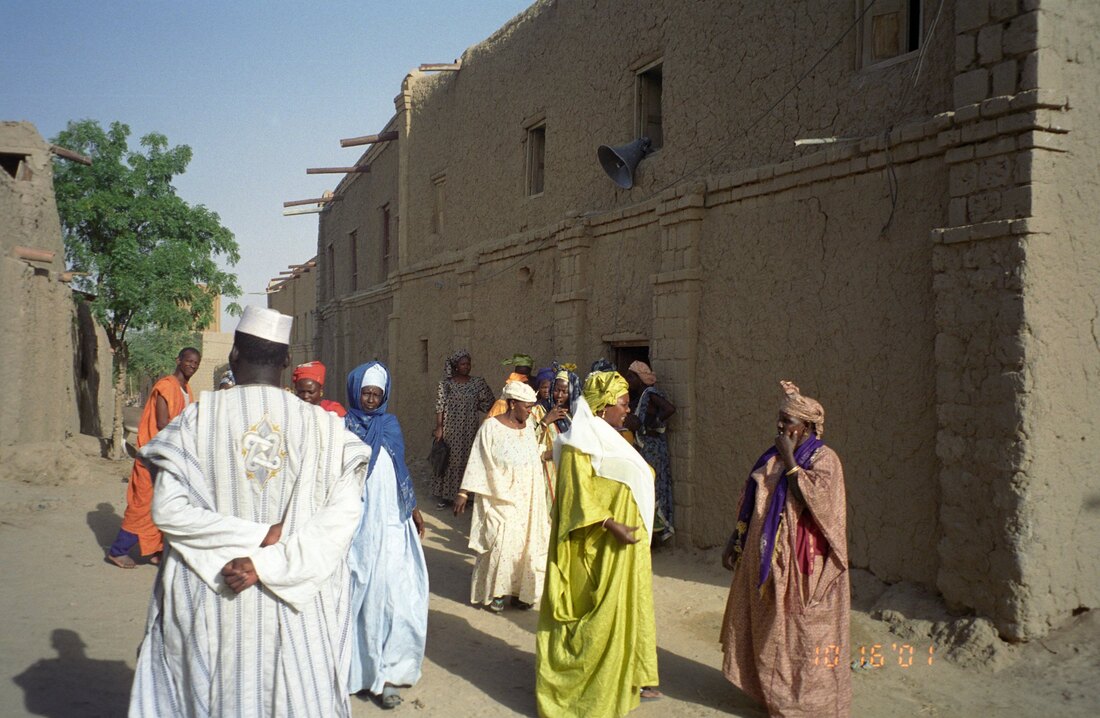
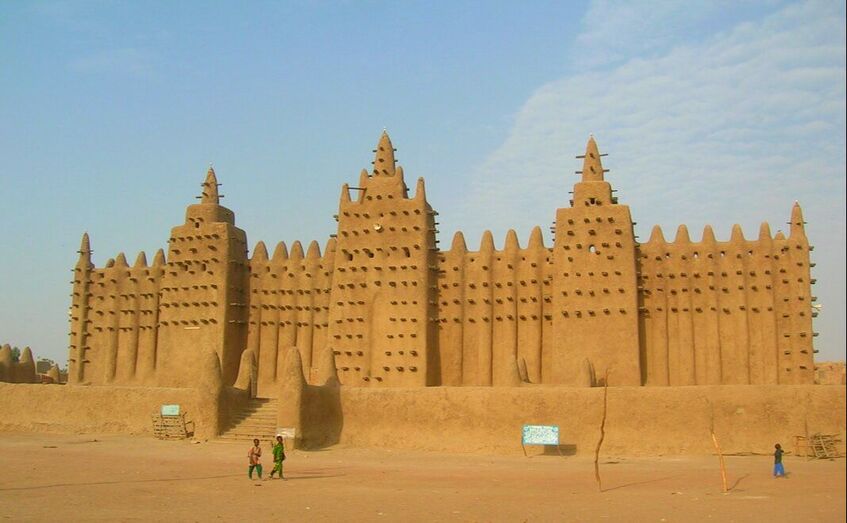
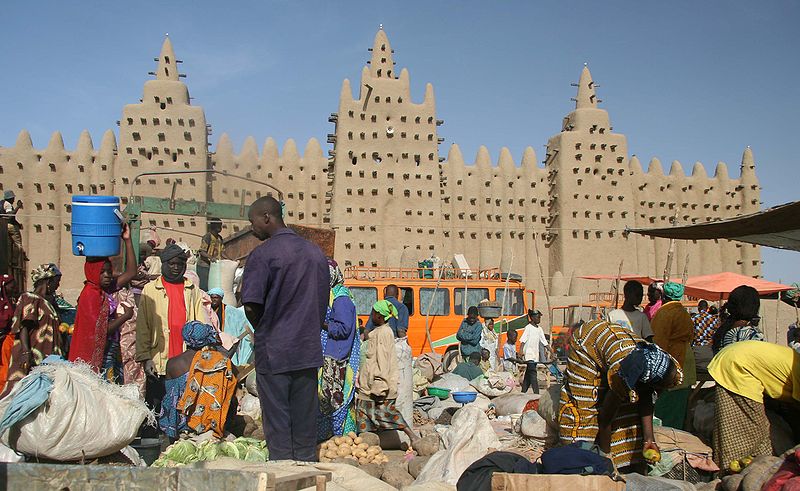
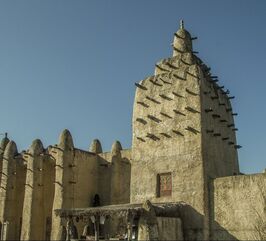
The Great Mosque of Djenne

History: Ghana, Mali & Songhai Empires
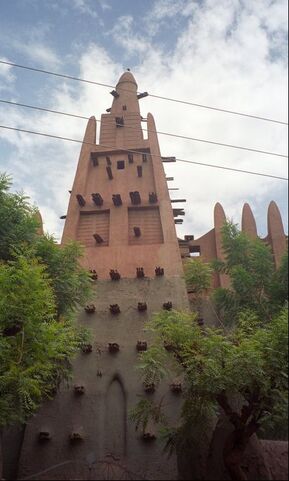
When studying Mali, it is important to remember that borders change over time. Several mighty empires have included the country now called The Republic of Mali, along with parts of other nearby countries. Therefore, when we speak of these empires, we are not only speaking of The Republic of Mali. Many West African countries are included in these empires.

The Ghana Empire

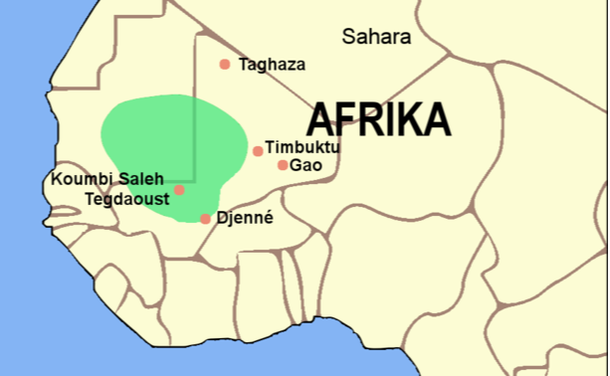
Picture
(Approximate size and location) The Ghana Empire actually included small parts of Senegal and Guinea as well.
Picture

Geography Fact:

The Ghana Empire must not be confused with the modern country known as the Republic of Ghana. These places only share names, not locations. The Ghana Empire was located mostly in the modern countries of Mauritania and Mali. The modern country (Republic of Ghana) is about 400 miles southeast of the old Ghana Empire. The Republic of Ghana chose its name to honor the Ghana Empire.
The beginning of the Ghana Empire (also called Wagadu or Ougadu) is uncertain. Many different dates have been assumed, some as early as 300 CE. The capital city of The Empire of Ghana was Koumbi Saleh. Their system of government allowed local chiefs to rule their people but required them to pay taxes to the Empire's king. The people of Ghana were well-protected by their military and strong iron weapons. They lived in peace for many centuries. The introduction of camels into Africa, along with its location, made the Ghana Empire an important trading center. People in the north desired gold while people in the south wanted salt. The empire would make money by taxing traders' goods when they entered the land and when they exited.

Koumbi Saleh was made up of two sections which were about six (6) miles apart. One part was for Muslims and the other part was for animists. The Muslim section included several mosques and schools. The Muslims' literacy and bookkeeping skills were an asset to the kingdom. During this time, the kings of the Ghana Empire were animists, so the palace was located in their section. This section also contained animist shrines and a mosque for visiting Muslims to use. As time went on, trade and invasion increased the practice of Islam in the Empire of Ghana.

By the 1200s, drought, trade competition, disunity, invasions by Almoravids (Morocco), and attacks by Tuaregs had greatly weakened the Empire of Ghana. War with the Sosso (Susu) Kingdom led to the ultimate end of the Ghana Empire.
Picture
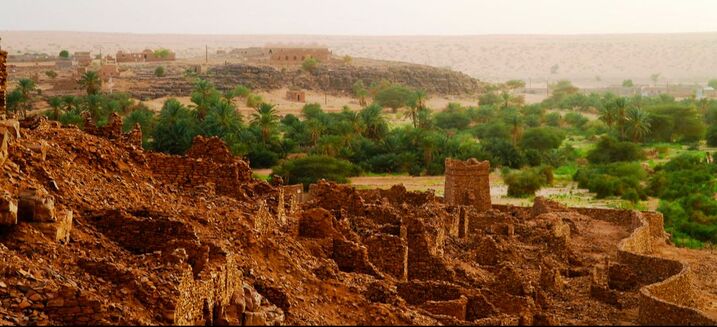
A view of the ruins of the city of Ouadane, Mauritania.

The Mali Empire
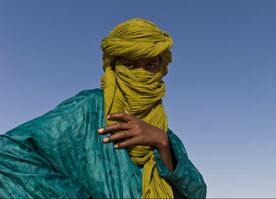
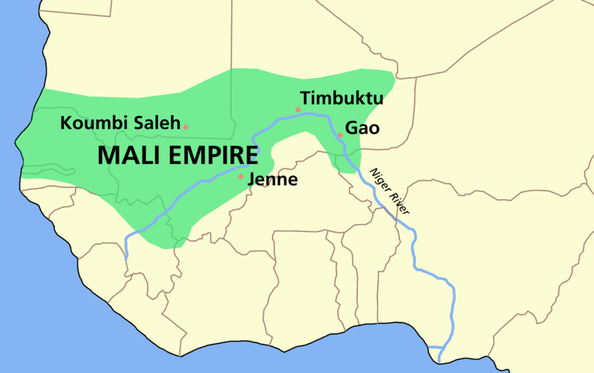
Picture
(Approximate size and location) The Mali Empire actually included parts of Burkina Faso, Ivory Coast, and Guinea Bissau as well.
In the 1200s, Sundiata Keita was born. His father was a king of the weakened Ghana Empire. According to the "Epic of Sundiata" (the traditional story of his history), Sundiata was disabled and could not walk as a child. He was treated badly by his family, especially his half-brother. Sundiata's mother took him far away to protect him from harm. While he was gone, Sundiata's people were conquered by the Sosso Kingdom. Despite his physical challenges, Sundiata rose and returned to lead his people to victory. He defeated the Sosso Kingdom at the Battle of Kirina. Many people believe the storyline in Disney's "The Lion King" films is stolen from his legacy.

After defeating Sosso, Sundiata founded the Empire of Mali and became its first mansa (king). He expanded the borders of the powerful Mali empire. The capital city of Mali was Niani and the educational center was Timbuktu. The government allowed each tribe to have a representative at the royal court. During Sundiata's reign, the Mali Empire was an important center for trade in salt, gold, and manuscripts. Mansa Sundiata Keita created the first constitution of Mali, The Mande Charter. Many of those laws influenced the Republic of Mali’s modern constitution.
The Epic of Sundiata performed by his descendant, Professor Keita
Mali was extremely wealthy. The practice of Islam increased in the Mali Empire due to intelligence and trade, not by force. Although the rulers were generally Muslim, they did not force their people to convert. Islam had a great impact on the customs, laws, education, and language in the area. It allowed the empire to enjoy the many benefits that come with being part of the ummah (Muslim community).
 
In the 1300s Abubakari Keita II, a Malian king, left his throne to explore the world. He wanted to know if there was land on the other side of the Atlantic Ocean. Our historians, such as Ivan Van Sertima, believe he successfully landed in the Americas in 1311. This was nearly 200 years before Christopher Columbus’ disastrous trip in 1492. Despite his achievement, many historians in Mali shun Abubakari for renouncing his throne of leadership. They believe that quitting his post was disgraceful, so some jalolu do not speak about him. Many white historians pretend this trip never happened.
 
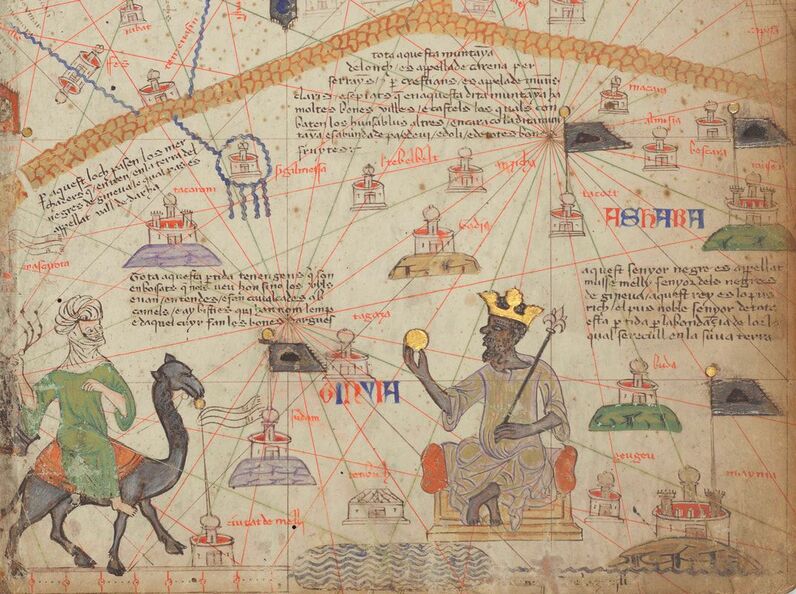
Mansa Kankan Musa Keita (Mansa Musa I) soon became king. Mansa Musa was a devout Muslim. He continued to expand the Mali Empire's land and power. However, he is most famous for being the wealthiest man in known history. While completing his pilgrimage to Mecca for hajj, Mansa Musa built countless mosques along the way. Some historians have said that Mansa Musa's caravan contained up to 60,000 people and camels carrying an extraordinary amount of gold and other supplies. He gave away so much gold in charity (zakat/sadaqa), he caused Cairo's economy to crash. He returned with several Muslim scholars of various subjects and built additional universities to expand education in Mali.

After Mansa Musa's rule, the Mali Empire began to decline. Much of the decline was due to fights over leadership, weak leadership, attacks, and lack of unity.
Picture
A European map showing Mansa Musa and his gold as the focal point.

The Songhai Empire

Picture
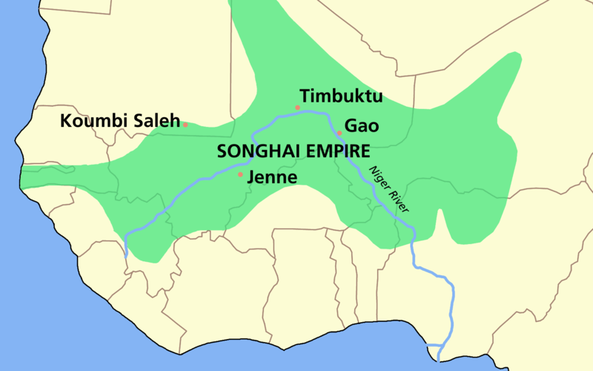
(Approximate size and location)
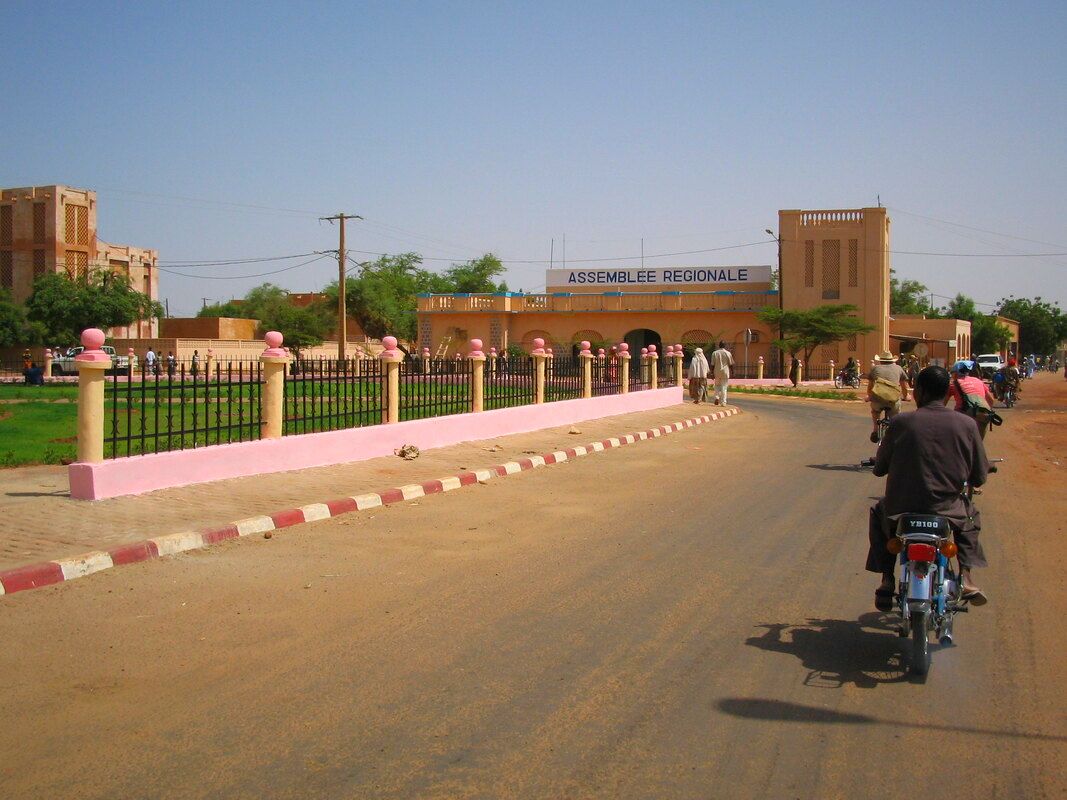
Songhai began around 1000 CE. It was located around the city of Gao and stretched further into the land east of the Niger river. During the height of the Mali Empire, Gao was conquered and became part of Mali. However, as the Mali Empire weakened, Songhai strengthened. Songhai recaptured the city of Gao, an important center of trade, and overtook Mali. Gao was chosen as the capital city of the Songhai Empire, but Timbuktu and Djenne were important cities as well.

In the 1400s, Sunni Ali Ber (Sonni Ali) established Songhai as a magnificent Empire. He was a gifted military strategist. His conquests greatly expanded Songhai’s territory. In the process, he caused great harm such as torturing people, starving people into submission, and damaging cities. Some people view him as a tyrant while others consider him a great leader. Some historians have said that Sunni Ali was a Muslim who was very weak in his practice of Islam. Allah knows best. At its height, The Songhai Empire exceeded Mali in wealth and land.
 
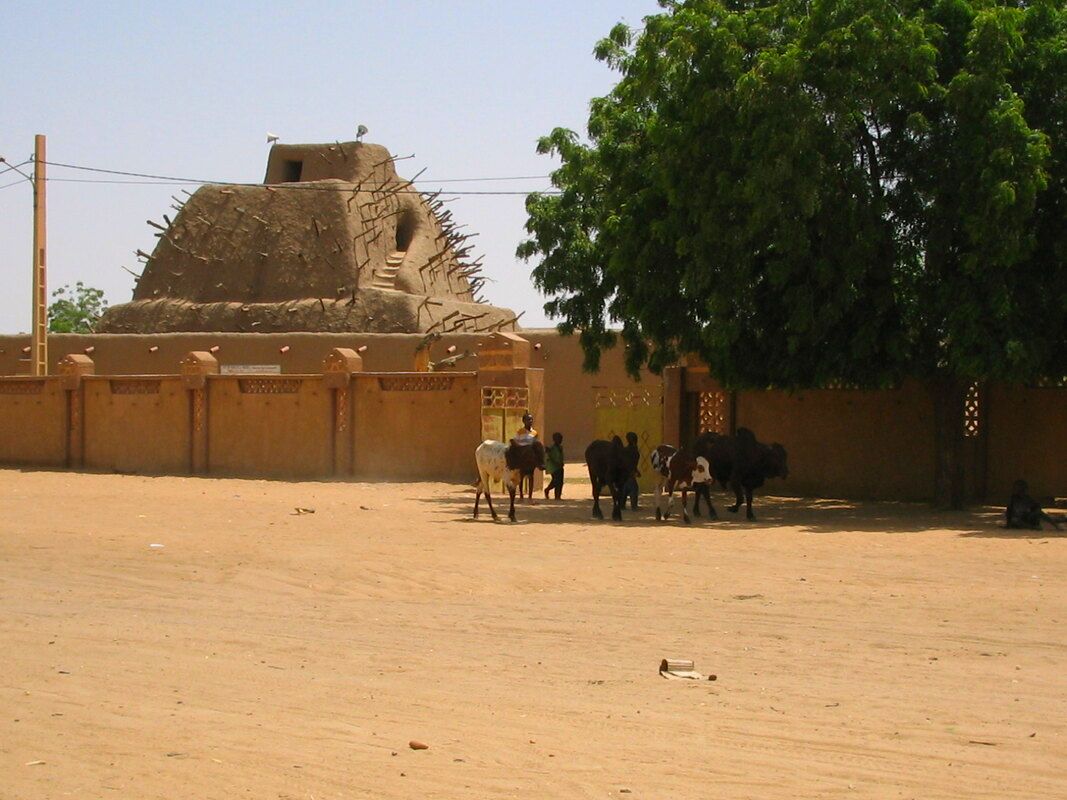
In the late 1400s, Askia the Great (Askia Muhammad Toure I) took control of the Songhai Empire. Askia was a devout Muslim. He established Islam as the religion of Songhai, but he did not force his subjects to convert. He built many mosques and schools, and the practice of Islam naturally increased through intelligence. Under his leadership, Songhai became one of the largest empires in African history.

Following the trend of previous empires in this region, disunity caused Songhai to decline. As Askia the Great grew old, his sons revolted against him. They wrongly thought they were better suited to lead. Unfortunately, when the Moroccan sultan, Ahmad al-Mansur, saw weakness, he decided to wage war on his Muslim brothers to unite the empires and gain access to Songhai's resources. This ended the Empire of Songhai. A while later, the sultan died from the plague and Morocco began a drastic decline in power.
Picture
Gao
Picture
Tomb of Askia the Great
Critical Thinking: Since 1975, the administration of the Nation of Islam has been destroyed by many of the same issues that plagued these empires. How can our divine teachings help us reform?

Colonization

The transatlantic slave trade weakened Mali further. Many of Mali's finest and most skilled people were tricked, kidnapped, and brought to the Americas by force. Here, our distinguished ancestors were enslaved and robbed of the knowledge of self. They were forced to drink alcohol, eat pork, act indecently, and practice Christianity.

In the late 1800s, Mali was colonized by France. This means that France conquered the Malian people to control them and steal their resources. They called the colony "French Sudan". The French colonized much of West Africa and many of these countries still speak French, along with native languages. Mali briefly united with their brothers in Senegal to form one country known as The Mali Federation. However, that did not last long. They separated and formed The Republic of Mali and The Republic of Senegal. Both are still Muslim countries to this day.  Modibo Keita was The Republic of Mali's first president. The Republic of Mali has been independent since 1960.

Cultural Contributions

Oral Historians (Griots/Jali/Djali) & The Glorious Kora

Picture
West Africa has a long tradition of passing down its history orally, through epic stories. Oral historians are called jali (or jalolu when referring to more than one). Jalolu are commonly called griots in the French and English languages. Jalolu are respected for their important teachings, skillful recitations, and amazing ability to recall centuries of history including births, marriages, deaths, battles, and other noteworthy happenings.
 
A jali, like all teachers, is extremely powerful. They choose with whom to share knowledge. Historically, they have filled the role of diplomats, advisors, tutors, poets, and musicians. Often, western historians are forced to rely on the jalolu to “fill in the blanks” of “lost” or hidden history in West Africa. Jalolu, along with manuscripts, are why we know so much about the great empires of West Africa.
 
The role of the jali is passed down through families, usually from father to son or mother to daughter. A female is called a jalimuso (muso means woman).  To be a jali or jalimuso, you must be born into the caste of oral historians.
 
Many people, especially those of the Mande ethnic group, recite their history while playing a unique instrument, the Kora. Koras are handcrafted from gourds. They have a beautiful, soothing tone that complements the smooth, soulful voice of the jali.

The Manuscripts of Timbuktu

Picture
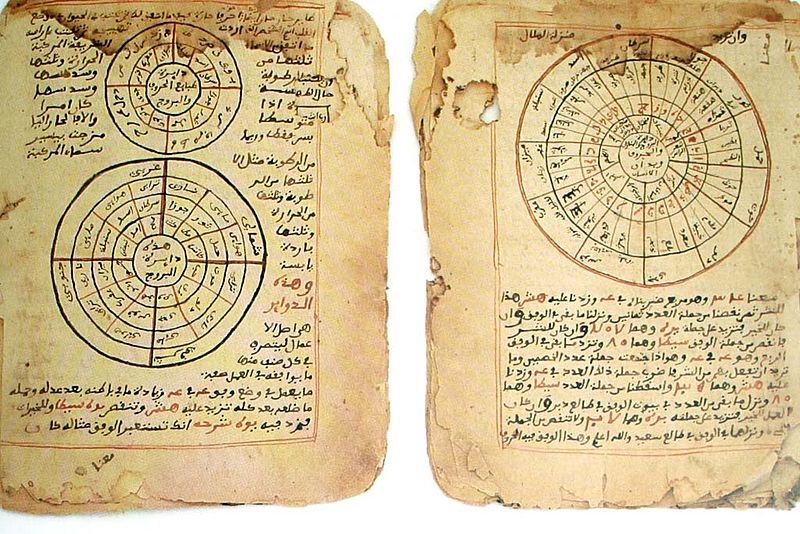
For centuries, rare manuscripts (handwritten texts) have been preserved by the people of Timbuktu, Mali. Historically, Timbuktu has been a great center of learning. Many scholars have studied at Sankore and other local universities. They wrote or translated very important academic works. These manuscripts discuss many of the subjects necessary for a high civilization such as Islam, philosophy, science, medicine, the arts, and history.

No one knows how many of these manuscripts exist because they are kept carefully guarded from people who do not value knowledge. Many of these documents have been kept safe, either hidden in homes or buried in the desert. Timbuktu has been invaded many times. Frequently, manuscripts have been stolen or destroyed. Still, it is estimated that there may be 700,000 – 5,000,000 manuscripts left.
 
Because of the need to hide these manuscripts from invaders, many texts have been damaged. It is hard to store manuscripts properly in the harsh climate of Timbuktu. Extreme weather and flooding can destroy fragile documents. Under the guise of helping the people of Timbuktu preserve these great works, the devil has begun to gain the trust of some people. Families are being persuaded to share their manuscripts to protect them from further damage. The devil is now helping these documents to be scanned into databases. They only offer help so they may gain access to the wisdom of the Original people which has been kept hidden from them.
 
We, the Black man and woman, must master all sciences, including computer technology. With the proper training, we can keep our own sacred knowledge protected and preserved. A true Muslim is a seeker and protector of knowledge.
Parental Discretion Advised

What Lesson Can We Learn?

Picture
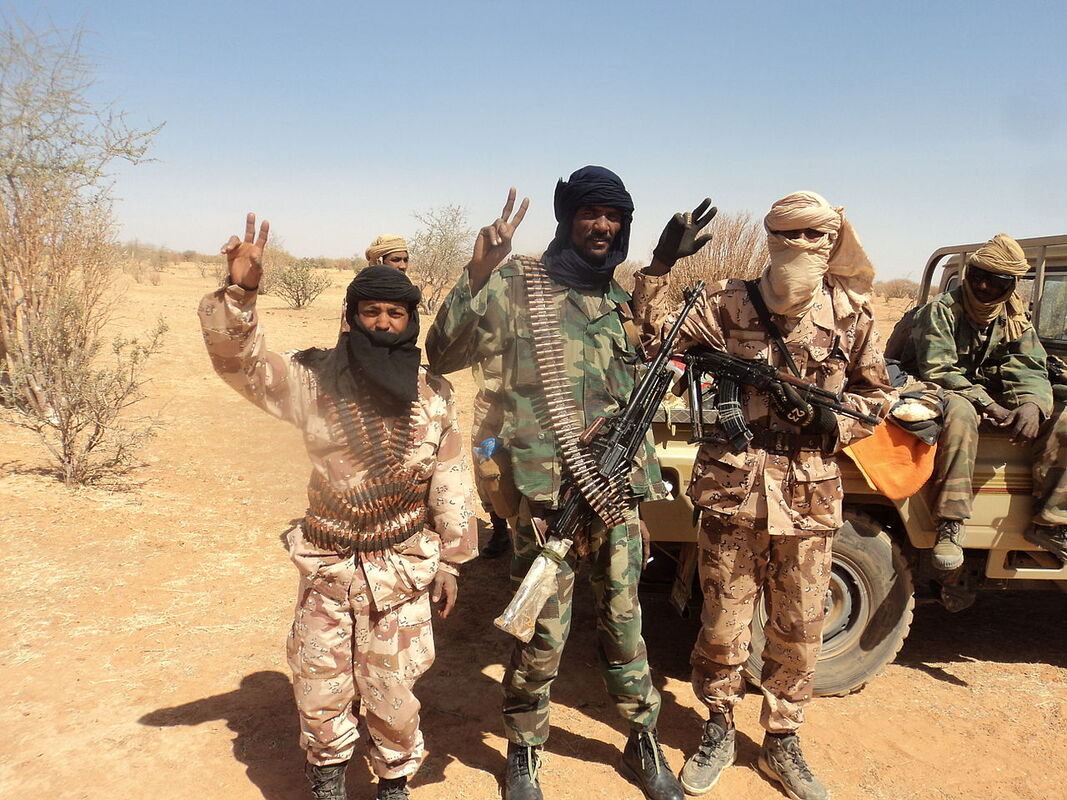
In 2012-13, countless rare manuscripts were destroyed during the Malian Civil War by separatists. These separatists are dissatisfied with the Malian government and desire to form a country of their own called Azawad in northern Mali. Unfortunately, they chose to damage libraries in Timbuktu. Even in battle, civilized Muslims should preserve knowledge, not destroy it.

Geography

Picture
The Sahel
Picture
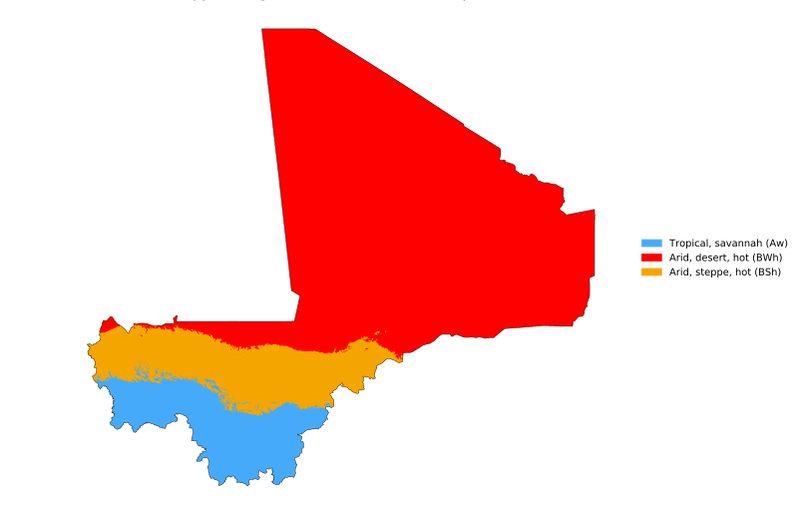
Climate zones in Mali
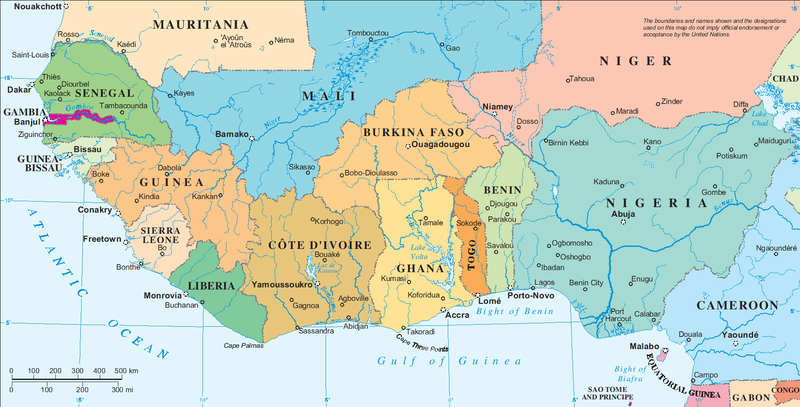
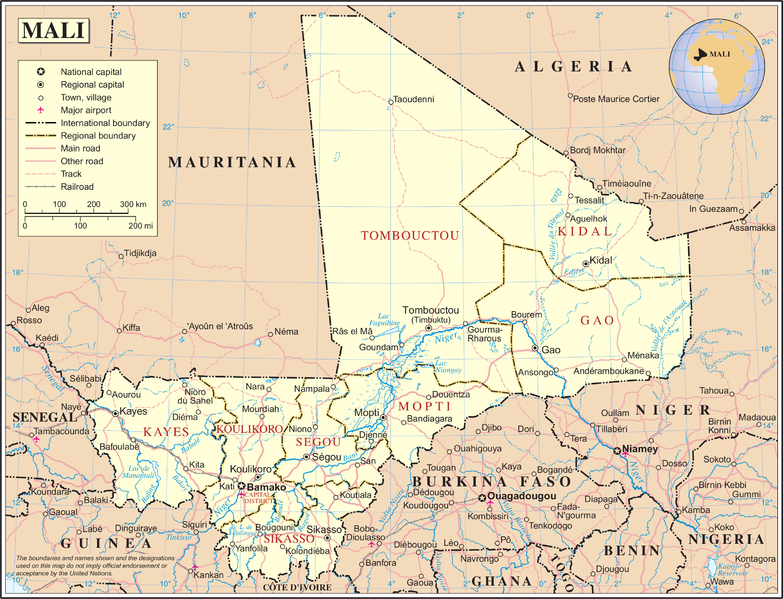
The Republic of Mali is a located in northwestern Africa. It is a landlocked country, bordered on all sides by other nations and having no access to the ocean. Mali is surrounded by the countries of Senegal, Mauritania, Algeria, Niger, Burkina Faso, Côte d'Ivoire (Ivory Coast), and Guinea.

Mali is a diverse country whose land, history, and resources are vast. Mali’s natural resources include gold, silver, copper, diamonds, granite, iron ore, salt, uranium, and many others.  Because most of Mali’s land is desert or semi-desert, only a small portion of its land is appropriate for farming. Despite these facts, most Malian people make a living through agriculture. Mali’s crops include cotton, millet, rice, corn, sorghum, vegetables, and peanuts.
 
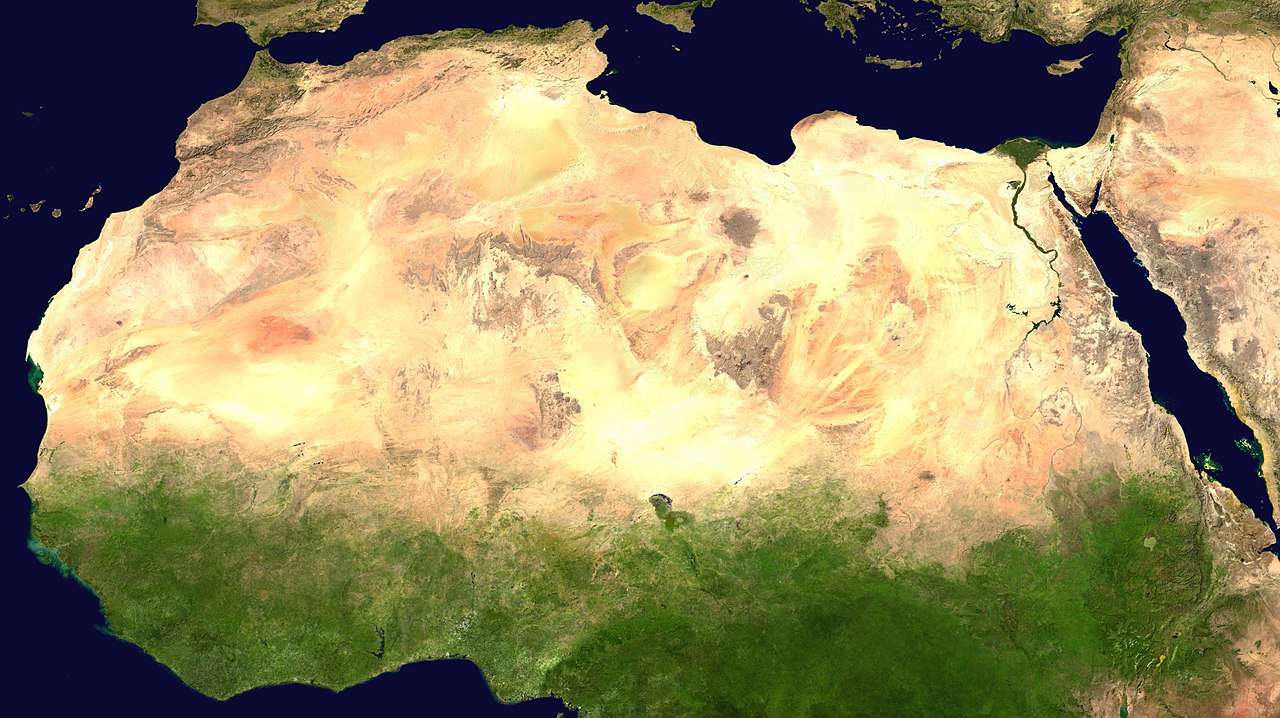
Much of Northern Mali is covered by the scorching sands of the Sahara Desert. It is hot and dry. Many parts of northern Mali, sometimes called the "Saharan zone", are uninhabited. However, parts of the desert are home to nomadic tribes such as the Tuareg people. There are also some populated towns and villages.
Picture
Republic of Mali
Picture
Image of Northern Africa
The Niger River flows through central and southern Mali. It has been the most important river in Mali's development because it allowed easy trade between Mali and countries to the south. The Senegal River is also important and flows through southwestern Mali.

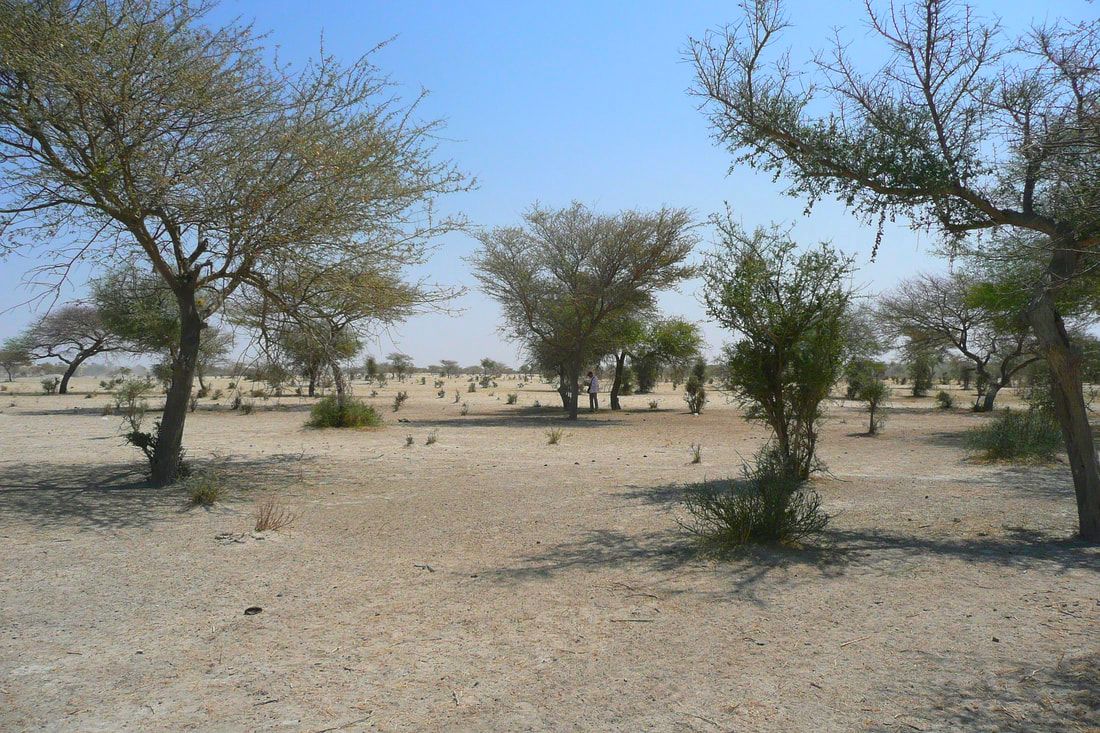
Central Mali is covered by an arid semi-desert landscape, known as the Sahel. This region, also called the "Sahelian zone", experiences frequent droughts. Desertification is a problem here, meaning every year, more of this dry savanna becomes desert land. It becomes harder to produce crops as the land becomes barren. Thankfully, the Niger river floods during the rainy season, keeping the nearby land fertile.

Southern Mali, also known as the "Sudanian" zone, is covered by a green savanna landscape. This is a lush, fertile zone with access to both the Niger and Senegal rivers. The majority of Malian people live towards the southern parts of Mali because the climate is much better. The south has lots of baobab, mahogany, and kapok trees.

STEM Solutions: The Great Green Wall

Picture
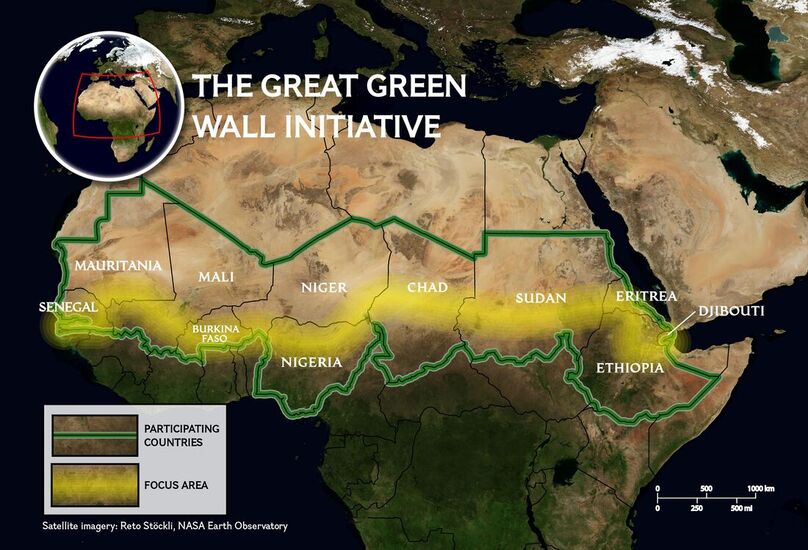
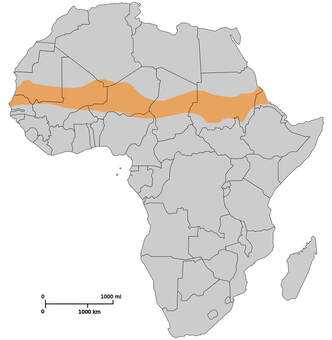
The Sahel region of Africa is a long, narrow area. It is located between The Republic of Senegal in the west and the Republic of the Sudan in the east. The Sahel begins at the edge of the Sahara Desert in the north. It extends to the tropical areas in the south. Its central location made the Sahel an important center for trade and learning. The climate of the region is semi-arid. Sahel/Sahil is the Arabic word for 'coastline' or 'shore'. Mali is a Sahelian nation.
Picture
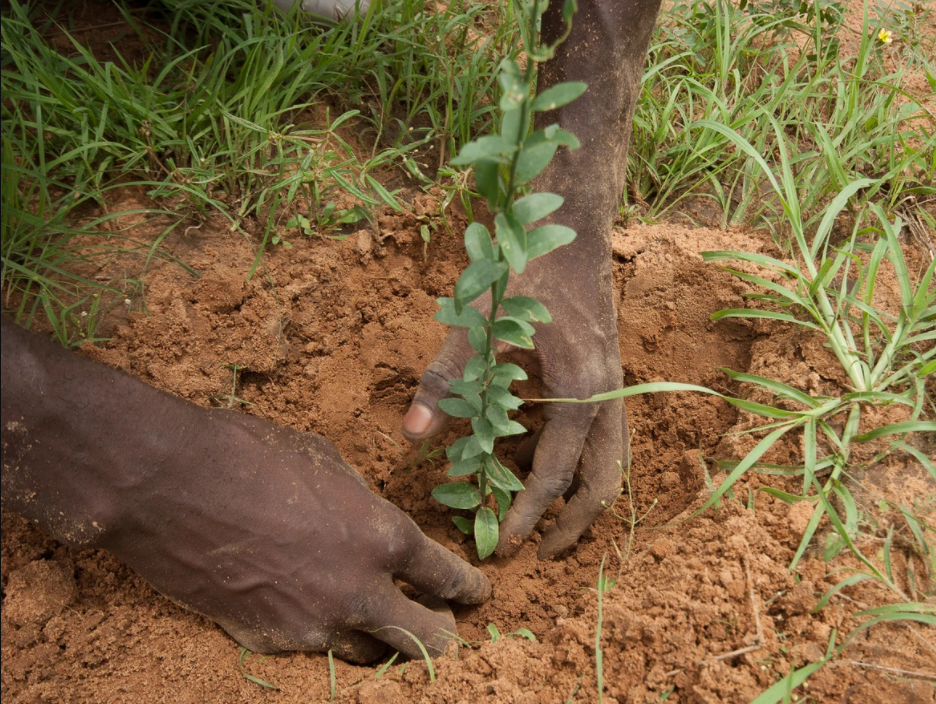
The Great Green Wall is an ambitious plan, led by the African Union, to improve agriculture in the region. Senegal, Mauritania, Mali, Burkina Faso, Niger, Nigeria, Chad, The Sudan, Ethiopia, Eritrea, Djibouti, and others have agreed to promote the restoration of this land. The Sahel used to be rich in vegetation. However, deforestation, overgrazing of cattle, and poor land management have severely damaged the soil quality. The soil must be restored for the countries to do for self and become completely independent from relying on the charity and interference of Satan.

The Great Green Wall is not just a long "wall of trees" bordering the Sahara. It is a very complex program using methods that differ from country to country. The leaders of these nations are focused on solving the needs of each unique community. The goal of the Great Green Wall is improving and maintaining the soil, increasing agricultural productivity, providing income, and improving the lives of citizens. They are working to restore damaged ecosystems  (a community of living things and their environment) that will adapt and thrive as the climate continues to change. This is best done at a local level. Like pieces of a puzzle, the accomplishments of each local community will combine to make the Great Green Wall successful as a whole.

In the end, it will be nearly 5,000 miles long and 9 miles wide. A project of this size takes time to reap results. Yet, there are many "Great Green Wall" success stories.
  • Despite many challenges, The Great Green Wall has already achieved 15% of its goal.
  • Ethiopia has restored 15 million hectares of land.
  • Nigeria has restored 5 million hectares of land and created 20,000 jobs.
  • Burkina Faso has restored 3 million hectares of land.
  • Niger has restored 5 million hectares of land and increased grain production to feed its people.
  • Senegal has planted more than 12 million trees. Many of these are acacia trees, which produce a valuable substance called gum arabic. This generates income.
One of the issues with the Great Green Wall in the Sahel is funding (money). Original people must be able to fund our own projects by ourselves so that the devil cannot gain influence over them. We must also be responsible for the money we are given. Our leaders must not steal it or waste it.

Disunity among people is another issue with some communities along the Great Green Wall. When people are fighting each other, it is difficult to develop that area. Whatever progress one makes is likely to be destroyed by war. Our people must learn to live in peace with each other to truly benefit from this program. When we unify for the good of everyone, we can achieve great things.

Can you think of any other issues that may affect the progress of the Great Green Wall?
Picture

Critical Thinking:

Picture
  1. List some practical ways to improve this project.
  2. What is the responsibility of the national and local governments to ensure success?
  3. What is the responsibility of citizens to ensure success? What can they do to help themselves?
  4. How can the ideals of Islam help make this a success?
  5. How can basic STEM education help make this a success?
  6. What role does permaculture have in this project?
  7. Why is it important for Africans (Asiatic Black Men) to lead this project?
  8. What lessons can the Nation of Islam learn from this project?
  9. Imagine a unique project for local people (school gardens, community gardens, classes, etc.) that could be used in the Great Green Wall project. Write a short essay that describes it in detail.

Magnificent Mali

Picture
Picture
Picture
Picture
Picture
Picture
Picture
Picture

Divine Guidance From Our Messenger

Picture
Message To The Black Man
A Sound Economic Plan I

“The economical way to use the money you save is first to buy farm land and produce your own food. You can raise enough cattle, sheep, cows and chickens by the thousands if you try following our program. We could cut down on our clothing bills - some of us by about 30 per cent - and yet be well-dressed. Again in this way we could build a national savings bank from deposits for ourselves, and invest our money in the purchase of necessary things for our nation. Then, you could cut down your present high cost of living.
 
Purchase real estate, buy farm and timberland. Convert the timber into lumber and build homes for yourselves as the white man is doing. Of course, he will have the authority over whether or not to sell the land to you. Get clay land. With marsh clay land and hill clay, you can make your own bricks. Bricks are inexpensive to make once you get your kiln built and tracks laid. The greatest expense would be coal or gas to fire your bricks. Build brick homes for your own people and sell them to your people at a very reasonable price.”

Qualify Yourself! Career Options for Muslim Children to Consider

Picture
"We, the Black people in the Western Hemisphere, should unite and turn our attention to the most important and the most essential issue of life - farming. This is man's greatest industry; the first step to self independence; the engine of life and the prosperity of life."

- The Hon. Elijah Muhammad
Farming: Self Help

Agricultural Economics & Agribusiness

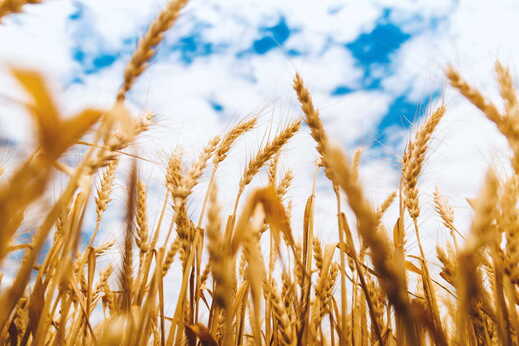
Agriculture is the foundation of civilization. No matter how much we fast, sooner or later we must eat. Some cultures do not farm, they prefer to hunt wild animals and gather wild plants. This takes a lot of time. When one spends most of his day looking for food, there is little chance for self-development. An underdeveloped person is ignorant of their power. They often begin worshiping nature and living the life of a savage. However, mastering agriculture allows one to plan carefully, harvest crops, and slaughter the animals under their care. When plenty of safe food is available, one finds time for study and development. One's quality of life is greatly improved. Many wars are fought simply because there is not enough food to go around. When people are well-fed, they are less likely to fight. Good food creates stability and peace. Extra food can then be traded for other items. This is how economies are built.

The Nation of Islam stresses the importance of agriculture, but what if you do not have a "green thumb" or prefer a "white collar" profession? Are there careers in the field of agriculture that are beneficial to our people but do not require one to plant and harvest crops or raise livestock directly? The answer is "yes". Our Nation needs all types of professions that relate to agriculture and other high sciences.

Agricultural economics
deals with the finances (money) of agriculture. Agribusiness refers to the business (industry) of agriculture. The agricultural industry includes
the production, distribution, and use of goods and services related to crops and livestock. In these fields, professionals study trends, improve the efficiency of systems, and ensure decisions are made wisely.

Knowledge of agricultural economics and agribusiness is important to get the most benefit out of our farms. In developing nations, many people rely on subsistence farming for their livelihood. However, subsistence farming keeps farmers poor. Without advanced science, it is challenging to control how much food is produced. Bad roads and lack of refrigerated trucks make it difficult to get food to everyone. This can lead to famine even if there is plenty of food. Strategy, science, and infrastructure can turn subsistence farming into a business that allows farmers to provide consumers with plenty of nutritious, affordable food.
Picture
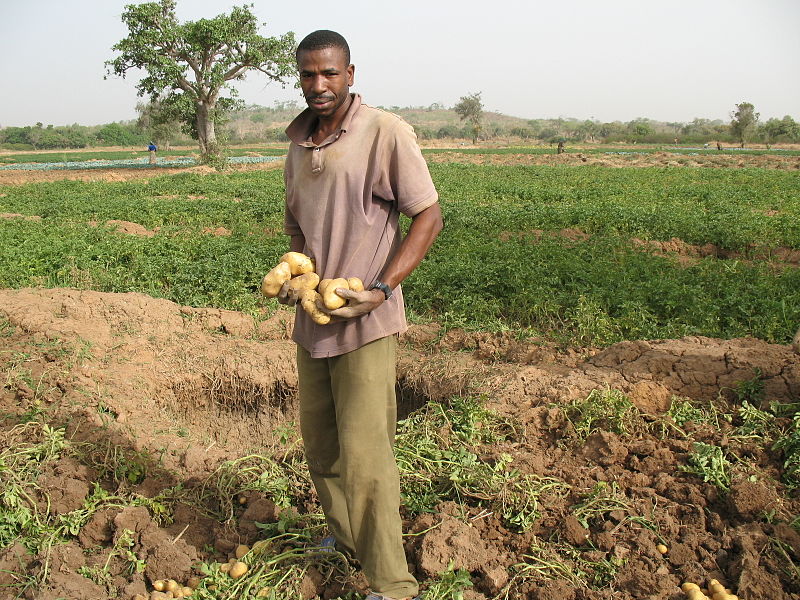
Potato farm
Picture
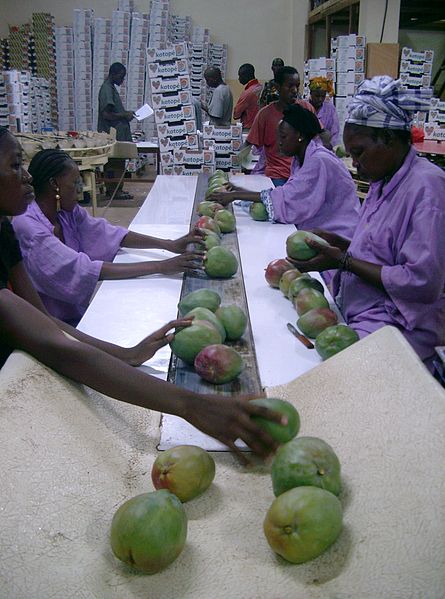
Mango processing
Picture
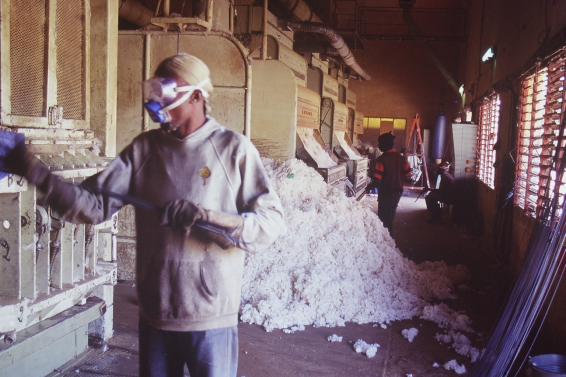
Cotton processing

Career options include (but are not limited to):

Crop Supervisor
Agricultural Credit Analyst
Investment Advisor
Purchasing Manager
Land Surveyor
Operations Manager
Marketing Manager
Budget Officer
Export Compliance Manager
Warehouse Manager
University Professor
Loan Officer
Real Estate Appraiser
Distribution Manager
Commodities Trader
Logistics Manager
Product Development
Market Researcher
Foreign Trade Analyst
Natural Resource Manager
Loss Control Specialist
Sales Representative
Production Line Manager
Cost Analyst
Market Analyst
Pricing Analyst
Farm Manager
Brand Manager
Co-op Manager
Sustainable Agriculture Consultant

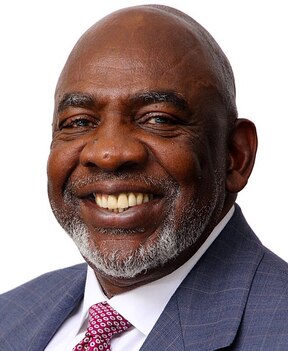
People You Should Know: Dr. Cheik Modibo Diarra

Picture
Education: Bachelor’s Degree in Mathematics, Analytic Mechanics, and Physics. Master’s Degree in Aeronautical Engineering and Mechanical Engineering. Ph.D. in Mechanical Engineering.
"THE BLACK MAN of America must be QUALIFIED with the most modern advanced sciences in education of the nations in order to compete with them and enable the Black Man to go for self."
- Hon. Elijah Muhammad
Qualification is a Must

Dr. Cheik Modibo Diarra is a Malian astrophysicist, businessman, farmer, educator, and political leader. He grew up on his family's farm in Mali. As a child, his mother encouraged him to take chances, experiment, and help others. His father taught him to be disciplined, to be precise, and overcome obstacles. After watching the devil land on the moon, Brother Diarra became interested in space exploration.

In 1984 he served as an Assistant Professor, teaching Engineering at Howard University. Howard is a historically Black university in Washington D.C..

In 1988, Brother Diarra worked at NASA’s Jet Propulsion Laboratory as an interplanetary navigator. He worked on several missions including Magellan (Venus), Ulysses (Sun), Galileo (Jupiter), Pathfinder (Mars), Mars Observer, and the Mission Design Team for future Mars projects.

In 1999 he decided to work for NASA part-time to dedicate himself to helping advance education in Africa. He founded the Pathfinder Foundation for Education and Development. This organization supports science education in Africa.

In 2002, he developed a research laboratory for solar energy in Bamako, Mali. He also became the CEO of The African Virtual University.

In 2006, he became the chairman of Microsoft Africa.

In 2011, he became the Prime Minister of Mali.

These are just a few of Brother Diarra's impressive accomplishments. When seeking education, we must learn skills that will advance our societies. We must get practical experience and use it to sit our people on top of civilization.

"One of my great concerns is to promote (the) rural world today: agricultural, livestock, and fisheries development.” - Brother Diarra.  
Picture
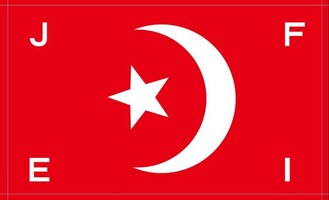
The Flag of Islam

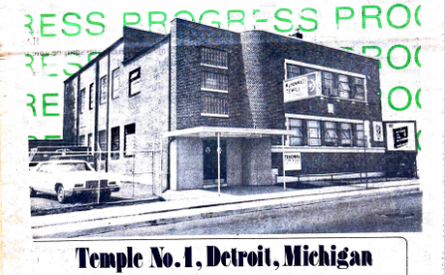
Our Nation's History: Temple #1 Detroit, Michigan

Picture
Similar to the Great Green Wall, the Nation of Islam's local temples were puzzle pieces that joined together to create success.  Our very first temple was located in the city of Detroit, Michigan. This is where Allah, Master Fard Muhammad, first appeared on July 4, 1930.

By 1974, the Detroit temple had a Muhammad's Temple of Islam, a University of Islam, a Muhammad Speaks Newspaper office, housing, a sandwich shop, a barbershop, an M.G.T. dress shop, a cold storage warehouse, a fleet of five (5) trucks, an ice cream parlor, a Shabazz restaurant, and Shabazz carpets.

Click here to see a paper displaying the accomplishments of Detroit, Michigan.

Accomplishments of the Muslims

Picture

Qur'an Printing in America

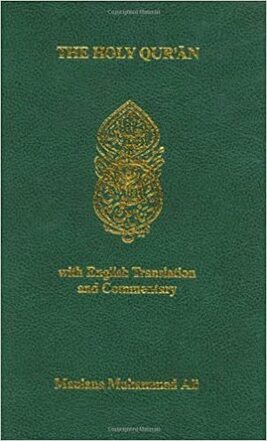
A 1973 Muhammad Speaks Newspaper article reports that the Nation of Islam is responsible for the first printing of the Holy Qur'an in America. Due to the teachings of the Hon. Elijah Muhammad, the Holy Qur'an was very popular in America. So many Qur'ans were sold that the overseas printers could not keep up with our needs.

Darul Kutub Islamia, the Pakistani holder of the copyright for the Muhammad Ali translation, agreed to let it be printed in America by the Specialty Promotions Company. The Specialty Promotions Company was a Muslim-owned bookseller and importer. This agreement allowed the Holy Qur'an to be printed in large numbers and to be sold at a good price. All praise is due to Allah for the Hon. Elijah Muhammad.

Accept Your Own & Be Yourself: Prayer (Salat/Salah)

Build Your Muslim Character

Picture
“Seek Assistance through patience and prayer.”
-Holy Quran Surah: 2:45

 
“IT IS FAR MORE IMPORTANT TO TEACH SEPARATION OF THE BLACKS AND WHITES IN AMERICA THAN PRAYER.”
- Hon. Elijah Muhammad, Message to the Blackman in America pg. 204

Prayer provides the basic structure of a Muslim’s daily life. Each day has a natural rhythm. Our rhythm is created by the routines which develop around the timing of our ablutions (wudu) and prayers. In comparison, the schedule of most other people revolves around their mealtimes (breakfast, lunch, and dinner). Prayer is essential to Muslims.

  • Wudu (ablution) creates a habit of cleanliness.
  • Prayer brings us extra time. We wake up before sunrise to begin our day. Most people are still asleep!
  • When Muslims pray, we remember Allah. When Muslims think of Allah, we strive to be righteous.
  • Prayer makes us humble. We beg Allah for His forgiveness and strive to improve our behavior.
  • Prayer makes us more grateful for whatever Allah blesses us with.
  • Prayer brings focus. We remember Allah is One, and no one is worthy of worship besides Him.
  • Our prayers teach us to use beautiful, intelligent language.
  • Prayer brings us together.
 
Prayer makes us better in many ways. Sincere prayer is necessary to establish a high civilization. However, after we pray, we must get up and take action to do for self.

Pop Quiz

Picture
Why does the devil call our people Africans?

Picture

Wisdom from the Holy Qur'an

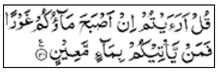
Al-Mulk (The Kingdom) 67:30
 
Muhammad Ali: “Say: Have you considered if your water should subside, who is it then that will bring you flowing water?”
 
Yusef Ali: Say: "See ye? If your stream be some morning lost (in the underground earth) who then can supply you with clear-flowing water?"
Picture
Nation Time - The Republic of Mali: A Primer for the Nation of Islam’s Children
Picture
As-salaam alaikum!
Did your child enjoy this free lesson? Expand your child's learning and support this site with this companion primer/workbook.
Your purchase helps us finance future projects and keep this site FREE.
Purchase

Photo Credits:

Marcos Elias de Oliveira Júnior
Francesco Bandarin
Ferdinand Reus
Felix Koenig
upyernoz
Jelle Jansen
Amitchell125
Olivier Epron
National Geographic

Ursula Branscheid
Magharebia
DwayneSamuels
Rgaudin
WTO Aid for Trade Global Review
Astrokey44
Roke~commonswiku

BluesyPete

Beck, H.E.
Zimmermann, N. E.
McVicar, T. R.
Vergopolan, N.
Berg, A.
Wood, E. F.
The Hague
C. Alvaro
David Sessoms

Home

Lessons

Free Resources

Bookcase

NOIWC Archives

Copyright © 2021 Shabazz Tribe Books ~ NOIWC