Camels!
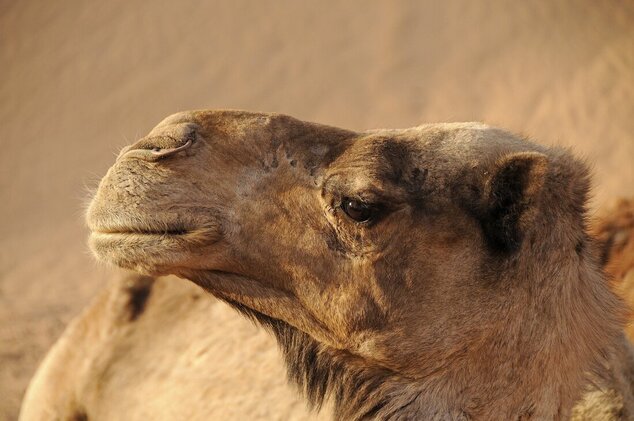
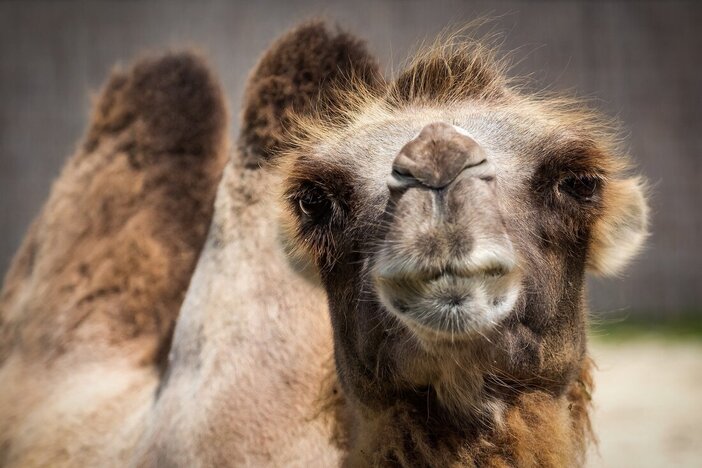
Have you ever enjoyed a camel ride? Historically, camels have helped Muslims travel long distances to buy and sell products. While traveling, we were able to share our righteous way of life with others. These great animals still offer many benefits in modern times, so we thank Allah for camels! Camels usually live in caravans (groups). There are three camel species: Dromedary (one hump), Bactrian (two humps), and Wild Bactrian (two humps). An easy way to remember the difference is to think of the letters "B" and a "D". "B" has two humps (Bactrian) and "D" has one hump (Dromedary). Easy!
The stomachs of camels are separated into three (3) parts, called chambers. These chambers help camels digest rough plants and grasses. Camels swallow their food, then bring it back up to chew it and swallow it again. They do this until the food becomes easy to digest. Humans have a very simple stomach that must do the hard work of digestion. We must take good care of it. The Honorable Elijah Muhammad forbid us from eating certain plants. Our stomachs are not made to digest them. We should be happy during every meal because the Messenger has taught us what foods to eat to live a long life!
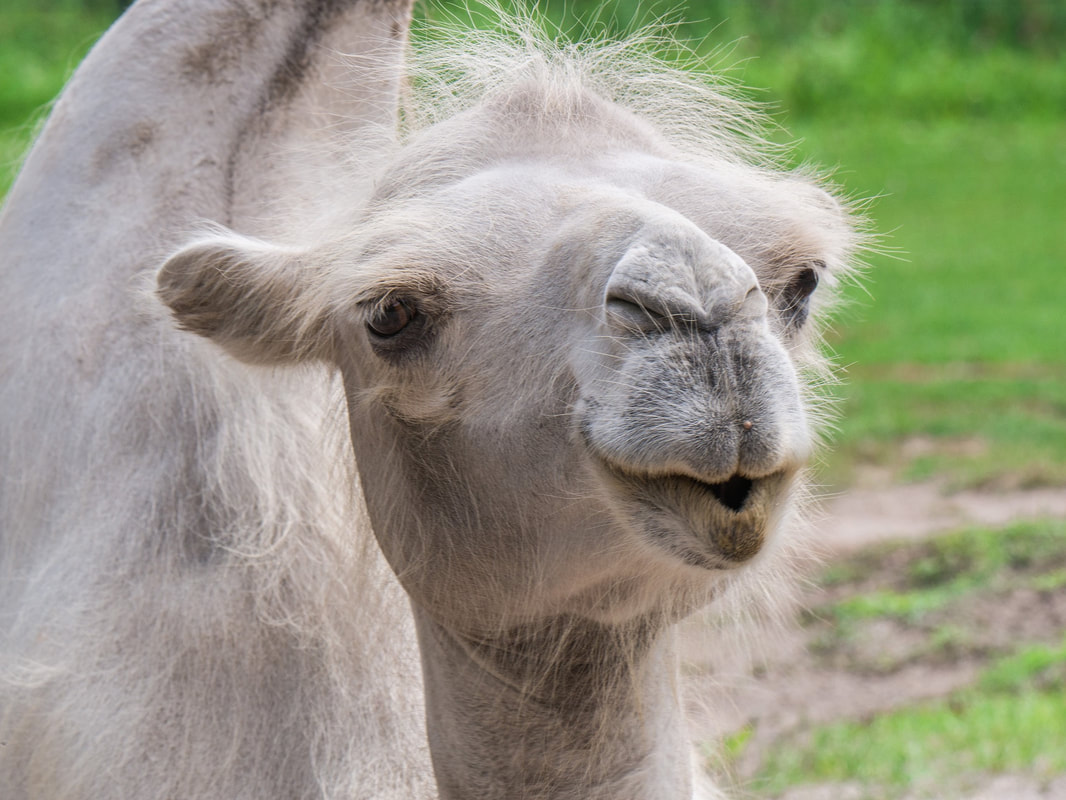
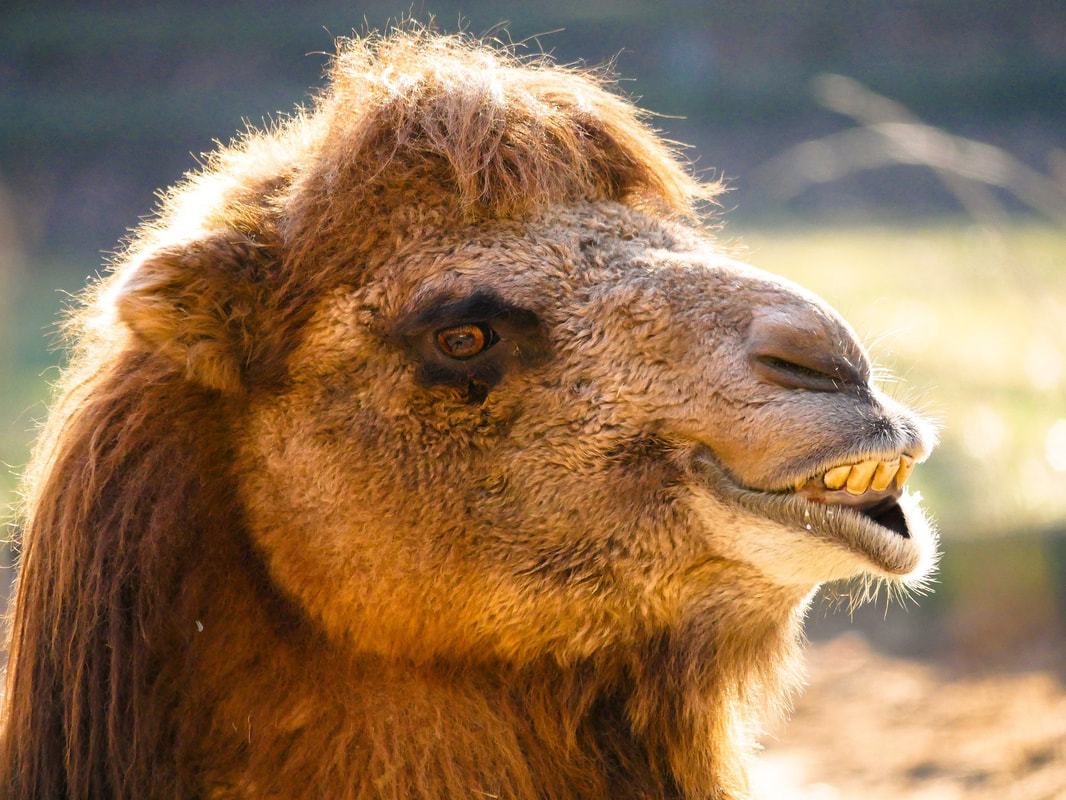
Animal adaptations are physical or behavioral changes that help animals survive. Camels have many adaptations which allow them to survive in harsh desert climates. They have a thick coat of fur that keeps them cool in the day and warm at night. A camel has two layers of eyelashes to keep sand from getting in their eyes and nostrils that close to keep sand from their nose. They are tall and have long necks to reach high tree leaves. Camels can store food as fat in their humps. The body temperature of camels can become cooler or warmer to suit the weather. Surah 88:17 of the Holy Quran asks, "Do they not look at the Camels, how they are made?" The amazing adaptability of the camel is clear proof that Allah is the Greatest (Allahu Akbar)!
Like cattle, each bull (male) usually mates with several cows (females). Cows usually give birth to one calf (baby) per year, but occasionally they have twins. Calves learn to walk shortly after birth.
The stomachs of camels are separated into three (3) parts, called chambers. These chambers help camels digest rough plants and grasses. Camels swallow their food, then bring it back up to chew it and swallow it again. They do this until the food becomes easy to digest. Humans have a very simple stomach that must do the hard work of digestion. We must take good care of it. The Honorable Elijah Muhammad forbid us from eating certain plants. Our stomachs are not made to digest them. We should be happy during every meal because the Messenger has taught us what foods to eat to live a long life!
Animal adaptations are physical or behavioral changes that help animals survive. Camels have many adaptations which allow them to survive in harsh desert climates. They have a thick coat of fur that keeps them cool in the day and warm at night. A camel has two layers of eyelashes to keep sand from getting in their eyes and nostrils that close to keep sand from their nose. They are tall and have long necks to reach high tree leaves. Camels can store food as fat in their humps. The body temperature of camels can become cooler or warmer to suit the weather. Surah 88:17 of the Holy Quran asks, "Do they not look at the Camels, how they are made?" The amazing adaptability of the camel is clear proof that Allah is the Greatest (Allahu Akbar)!
Like cattle, each bull (male) usually mates with several cows (females). Cows usually give birth to one calf (baby) per year, but occasionally they have twins. Calves learn to walk shortly after birth.
|
|
Did you know?
- Cud is the name for food that is brought up from the camel's stomach to be chewed again.
- Animals that have a stomach with three compartments are called psuedo-ruminants.
- The Honorable Elijah Muhammad advises that we may eat camels but warns it is not the best food for us.
- Camels have big, padded feet that flatten as they walk. This helps prevent them from sinking in sand.
- In the Middle East, camels compete in races and beauty contests!
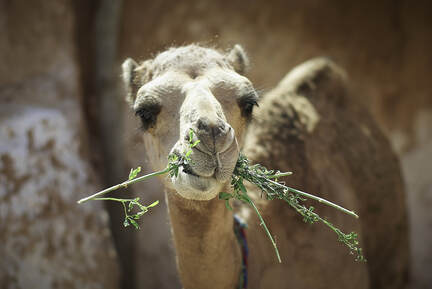
- Camels are herbivores. This means they eat plants.
- Some camels can sprint at speeds up to forty (40) miles per hour.
- Camels can drink up to forty (40) gallons of water at once.
- Camels can eat thorns without harming themselves.
- Camels "spit" when they feel threatened.
- Wild Bactrian camels live in the far east (Mongolia and China) and are extremely endangered.
- Camels are related to alpacas and llamas.
- Camels can live up to 40 years or so.
- Camels are born without a noticeable hump. The hump (or humps) develops as the calf grows.
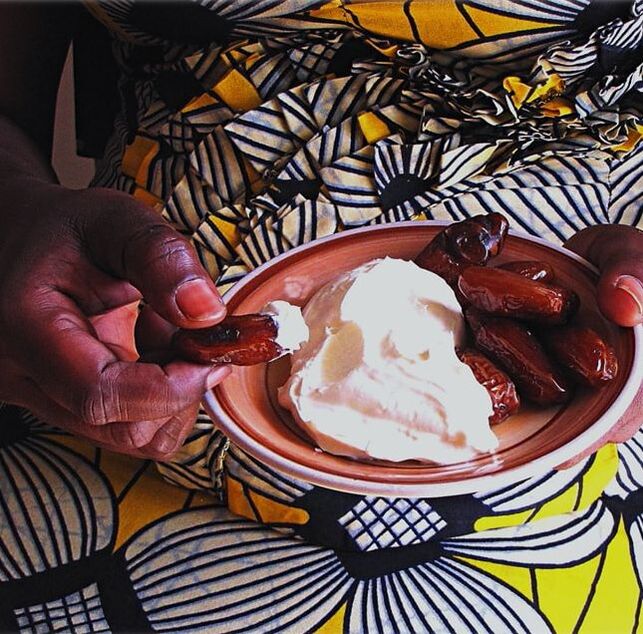
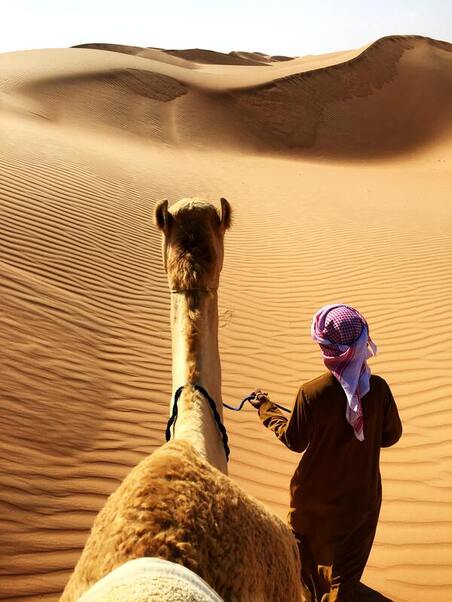
Camels have been domesticated for thousands of years. They are found in parts of Asia and throughout northern Africa. Camels are important in many cultures. Bedouins rely on camels for milk, transport, and entertainment. In Morocco, tourists enjoy camel rides during visits to the beautiful Sahara desert. Nomadic tribes of the Sahara can rely on camel milk to nourish them for weeks (sometimes months) when food is scarce. Some nomads still use camels to travel through the hot, sandy deserts.
Camels can be traded as currency, but often remain with the same family their entire life. Camels may be given to a bride or her family as a very valuable dowry (gift) from the groom. The fur of camels can be spun to produce wool, commonly called "camel hair", for clothing and blankets. Their skin can be made into leather. The bones of camels can be carved into jewelry and trinkets.
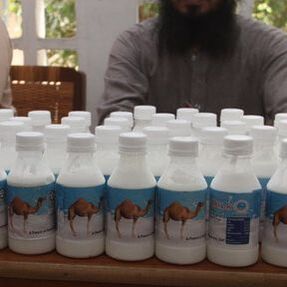
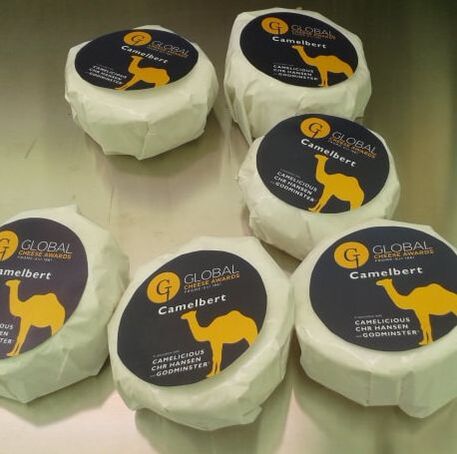
Most people don't eat camel meat often because the milk is more valuable than the meat. You can only eat a camel once, but you can drink it's milk for many, many years! Not only that, but the milk can be made into a variety of dairy products. The camel milk industry is growing in popularity from China to Africa. Climate change is making camels very desirable animals because they can survive in harsh climates. Our brothers in Asia are innovating many new uses for camel milk. It will be very interesting to see all the products that may be produced in the future!
Camels can be traded as currency, but often remain with the same family their entire life. Camels may be given to a bride or her family as a very valuable dowry (gift) from the groom. The fur of camels can be spun to produce wool, commonly called "camel hair", for clothing and blankets. Their skin can be made into leather. The bones of camels can be carved into jewelry and trinkets.
Most people don't eat camel meat often because the milk is more valuable than the meat. You can only eat a camel once, but you can drink it's milk for many, many years! Not only that, but the milk can be made into a variety of dairy products. The camel milk industry is growing in popularity from China to Africa. Climate change is making camels very desirable animals because they can survive in harsh climates. Our brothers in Asia are innovating many new uses for camel milk. It will be very interesting to see all the products that may be produced in the future!
|
|